


AI has let every writer/creator sound the exact same.
If you can’t write without using AI, you cannot think.
And if you can’t do that… forget about being a creator for a second.
You are in for a hard life.
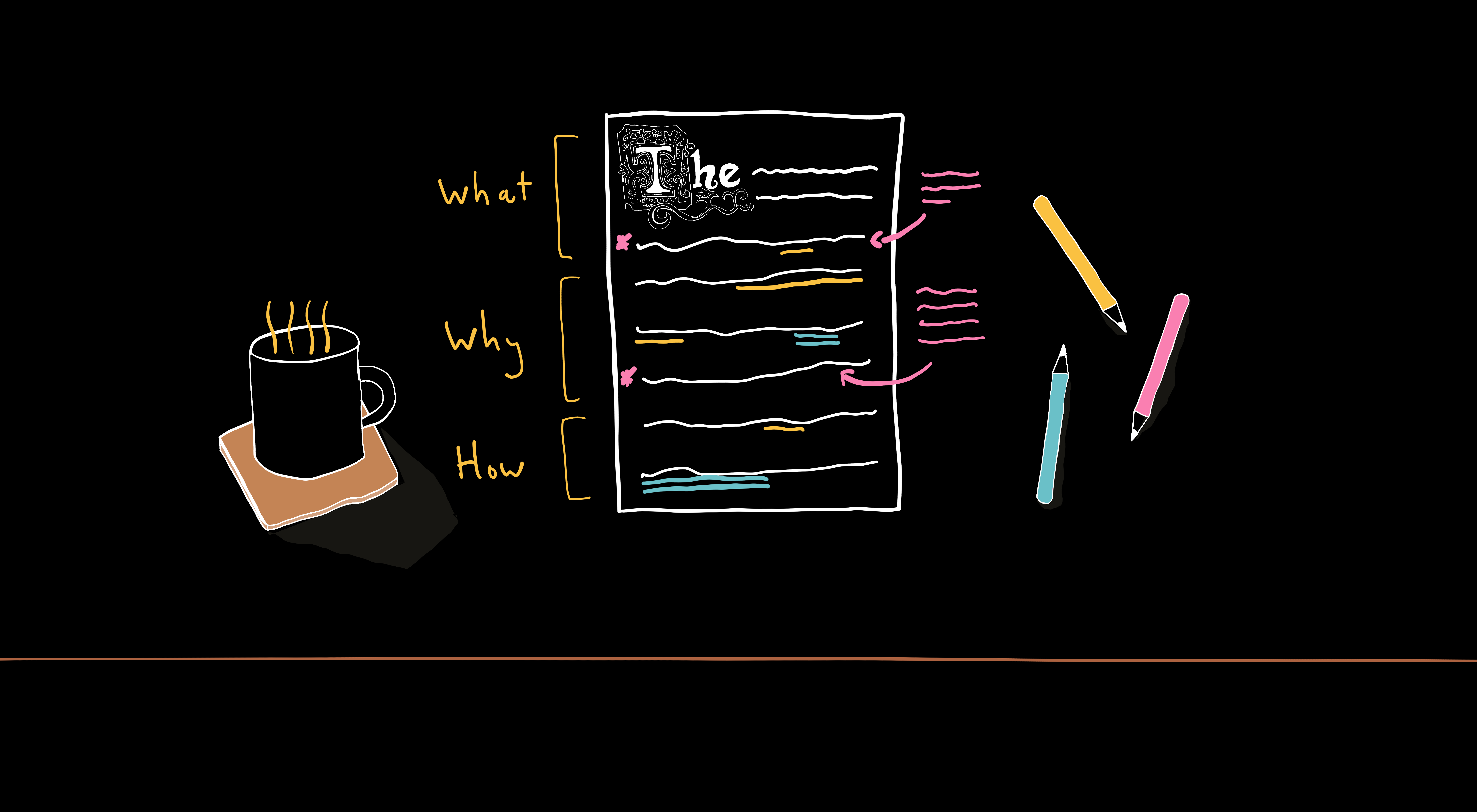
I am of the opinion that there is an objective standard for what is considered good writing.
By that, I mean two things.
There is (i) terrible writing and (ii) not-so-terrible writing.
Terrible writing… you couldn’t pay somebody to read it.
It’s poorly formatted.
It has no structure.
There’s no clear coherence between ideas.
I almost forget to mention poor grammar too.
Not-so-terrible writing is the bare minimum.
The sentences do connect.
The paragraphs do follow.
Something is being said orderly and clearly.
Once your writing is above terrible, everything becomes subjective.
(See how crazy it is to think about how many writers, creators, and entrepreneurs use AI to act as a yes-man with almost every decision they make? That is nuts to me.)
Subjectivity requires a self, and everybody nowadays is outsourcing that self to a machine.
With this exclusive paid guide, I will give you something more than a simple writing exercise.
It will punch you in the face, making you realise how much more thinking you will do with it, in as little as 10 minutes, compared to “brainstorming” for two hours with your buddy Claude.
This exercise will teach you how to write by thinking about how great writing is written.
Namely, across four levels of abstraction: the sentence, the paragraph, the section, and the full piece.
First things first:
Choose a long form piece of writing you love more than your morning coffee
Note: The long form post must be validated. By that, I mean high-performing (high views/engagement, is an outlier post compared to the creators audience size/usual engagement metrics, use Eden for this if you want help)
If it’s a Substack newsletter: 300-1k+ likes minimum (just do it)
If it’s on YouTube: 100k+ views minimum (YT videos are written scripts being read to a camera)
The reason we are choosing a validated post, is because engagement is a signal that other people responded to that writing for some reason. Your goal as a writer is to attract attention, no? To get people to read and become interested in what you have written, right? You need attention first if you want people to care about what you have to say.
Remember:
Engagement is a signal that other people responded to that writing for some reason.
This exercise will give you the ability to uncover those reasons, across any high-performing post, so you can write high-performing posts yourself, and grab attention and get people interested in your writing/ideas.
Even your offers, like how I have done with my own reading and self-education guides, and my paid-tier guides like this one.
Once you follow this process, you will never read a piece of writing the same way again.
And you might find, like I did, that writing by hand with your own brain doing the work is more enjoyable than anything AI could produce for you.
Let’s start with our first level of analysis.
What makes an sentence or an idea impactful?
Please read:
I will be breaking down 11 tools for unrotting your mind.
Why?
Well, it is high-performing (1k+ likes on Substack)
Which means there is something I can learn from this to apply to my future writing
And I like doing these exercises alongside you.
Because it’s proof, first of all.
Proof creates trust, in that I am an authority in long-form writing.
(I hate trying to sound like an expert, but it has to be said)
And two, I want to learn this myself.
So why not do it live, alongside you! :)
Level I - The Sentence (Idea)
This is the big question, folks.
What makes an idea profound?
Ultimately, it comes down to mechanics. In better words, what an idea or a single sentence is doing.
Assuming you have your (validated) piece of long form writing open beside you (I have mine here beside me), before you do anything, practice labelling what each sentence is doing.
Is it a pattern interrupt?
A curiosity loop?
A reframe?
A profound idea (or “big idea,” in advertising lingo)
A metaphor or a problem/pain point?
Label each sentence first, then interpret what each one is doing mechanically.
The order matters. You’ll see why in just a second.
Here is how I like to label my ideas, in the order of how I like to write each body section, following a what-why-how framework.
More on that later ;)
What the profound idea/problem is
Profound Idea - A bold assertion that something is true
Reframe - Accepts what the reader believes, then gives a different perspective on it
Problem/Pain Point - A pain the reader already feels
Pattern Interrupt - Breaks expected flow (one-liners, blunt statements, questions, the words “fuck” or “fucking” I use all the time)
Personal Experience - A story or experience from your own life in which you succeeded or failed at something
Quote/Statistic - Borrowed authority, always useful!
Loop Opener - A question or statement that temporarily witholds information for engaging effect
Why it is true
Concept - A named idea or framework explained
Insight - A non-obvious truth, it’s basically a reframe
Metaphor/Analogy - Makes abstract ideas physical
Anecdote - A short story that illustrates the point
Example - Concrete example of an abstract idea
What/How/Why - A question... pretty self-explanatory
How it relates to the reader, or the rest of the long form post
Consequence/Implication - What (likely negative) thing will happen if the reader ignores this idea?
Action Step - What the reader can do to achieve a benefit/avoid a pain point
Loop Close - Answers the opening question, or bridges to the next loop
Challenge - Redirects the argument toward the reader’s own behaviour, forcing them to self-evaluate
But you might be thinking, and rightfully so:
“But Craig! Why bother categorizing each sentence?”
Isn’t that a bit… boring?
Won’t it take ages?
Why not get AI to do it for me?
Well, my glorious friend, categorization is a form of encoding.
Encoding is how information gets stored into long-term memory. When you label a sentence before analyzing it, you are forcing your brain to (i) evaluate and then recall what the mechanism is beneath each sentence, and (ii) see the structure beneath the meaning of each idea.
That is how you read with the eyes of a writer, and not a reader.
Practice reading a sentence, or a cluster of sentences, and label each sentence mechanism. Then, keep the order of the mechanisms (pattern interrupt → loop → profound idea → loop etc.) but close the original piece of writing.
Now write your own version. Following the exact order of the sentence mechanisms you have extracted, and write about your own ideas, about any topic of your choosing.
This is what I call close imitation.
It takes just a few minutes to do.
A practical example will help make this make far more sense, once you can physically see what I mean.
Walkthrough
Here are the first 6 sentences from my long-form post.
On a random day your life will end.
With half-finished books and essays.
Ideas and plans you kept delaying till next Monday.
And thank god you spent it scrolling.
Real life is lived offline.
Which means every time you decide to scroll, you decide not to live your life.
Here is what each sentence/idea is doing at the mechanism level:
Bold Claim - A bold statement that something is true
Pain Point - A problem or pain the reader relates to, and therefore feels
Pain Point - Same again
Pattern Interrupt - An idea that breaks an expectation
Profound Idea - A core idea or concept within the entire piece
Consequence/Implication - What will happen (usually negative) because of an idea you aren’t acting on
With a little profound thinking, here is what I have come up with in about 10 minutes or so.
I’ve used the exact order of ideas listed above from 1-6, but on the topic of learning to think by writing essays.
Take a look:
You will never learn to think if you don’t write essays.
I know you hated writing essays in school.
I know that writing is extremely difficult and time-intensive.
Mind you, I am not talking about those types of essays.
It doesn’t take much time and effort to start writing either.
Because you only need as little as 30-60 minutes per day of writing, even poorly, to completely reshape your life.
That is how little you need to rewire your brain, bulletproof your thinking, and therefore determine every outcome you will make throughout the remainder of your life.
See how much more impactful this is compared to if I had just explained something simply?
Profound ideas are ideas that do something beneath the surface.
Every sentence should feel like a mind-fuck while reading it.
