


Contrary to popular belief:
Being consistent will ruin your life.
There is a massive hole in the online space talking about this right now, and it’s far from a laughing matter. You can get dangerously consistent at waking up a 5am, going to the gym, maintaining a few relationships, reading before bed, writing online and building a Substack newsletter.
Even then.
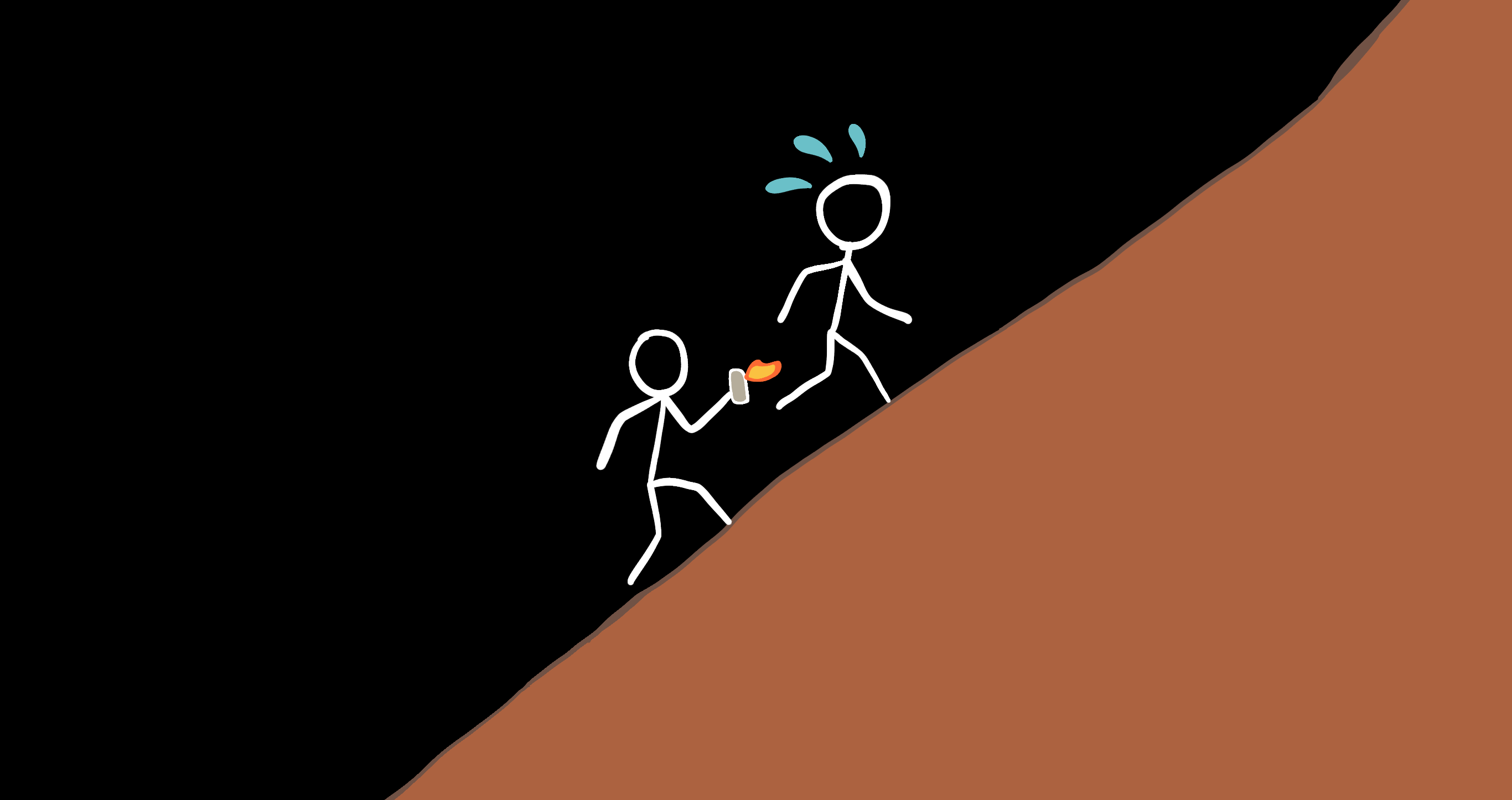
Most people who do become dangerously consistent… if they can even manage to build that consistency to begin with… they become highly skilled at doing things that don’t matter.
Not a single.
Fucking.
Bit.
Yeah yeah I know, it’s important to be consistent. Don’t be stupid. Every successful Silicon Valley founder has sworn by it. Every great writer has questioned their sanity before resorting to something as small (and powerful) as writing 6 pages a day, like Stephen King does.
Then you have every philosopher who ever lived. They all swore by the power of walking, consistently, multiple times per day. And who are you to judge them?
When I first started writing online last year, when I wanted nothing more than to grow an audience, I wrote one long form post per week because that’s what everybody else online told me to do. But it wasn’t until I knew exactly what to be doing CONSISTENTLY with my writing every morning that I started growing like mad, by hundreds of newsletter subs per day.
And I still am.
Because consistency only becomes a superpower when you’re consistent at the right things. And I can assure you. At least 90% of what you’re doing to achieve your goals (no matter what those goals are) is a waste of your time.
So in this Profound Ideas Letter, I want to think about 3 ideas alongside you. Specifically, why most of the consistency advice on the internet is destined to help you move backwards, not forwards.
We’re going to think about why volume always comes before quality. How to find the one constraint in your life that’s holding everything back. And then how to build a feedback loop that makes improvement guaranteed to happen.
Hold on to your butt.
We have some profound ideas to discuss.
Idea I - Learning Is Error Correction
I don’t know why we aren’t just told this.
Maybe I should write it out with a black Sharpie, directly above my bed, so it’s the first thing I see when I wake up each morning.
Read this twice for me:
You won’t know what your errors are unless you do volume, and if you’re not fixing errors, you’re not learning.
I don’t know why it is.
But the mind is a master at wanting to make improvements before it has done enough of something to know what needs improving.
Let’s turn to physics for a second.
Physicist David Deutsch has written a lot about the power of explanations.
What does this mean exactly?
You can put an explanation out into the world, test it against reality, have reality push back, then refine your explanation and send out a new and improved one.
An example, because this is very abstract:
I love footsweeps. It’s a type of takedown in jiu-jitsu/judo where you literally sweep someone by their feet (you can find a video on YouTube, you’ll see why anyone would love achieving a successful footsweep instantly).
This is why I’m saying this.
You can watch tutorial videos on how to hit a footsweep all day (and I have) about foot placement, hip rotation, leverage points and technique. But timing (knowing when your opponent’s weight has shifted and knowing the exact moment the attempt the footsweep) will only ever reveal itself during live rounds.
By making errors while doing. Because errors and mistakes live in the doing.
The average time it takes to achieve a jiu-jitsu blue belt is 1-2 years. Because that’s how many sessions worth of mistakes you need to fix.
You won’t know what good writing is until you’ve done enough writing to start seeing patterns. I’ve written close to 100 newsletters by now. Just to give you the harsh truth as to how many reps you need before understanding where you can start improving things within your writing process itself.
The Beatles played over 250 nights in Hamburg clubs, often for 4-5 hours a night, before they got huge and became The Beatles that everybody came to know. But before that, they had only ever done one hour sessions and about 60 gigs in total.
If you haven’t done enough of the thing that you wish to master, it means one thing:
Any judgement you make about yourself is based on insufficient data.
You wouldn’t read one paragraph of a hard philosophy book, fail to understand it first time around, and assume you just can’t read full stop.
So why are you evaluating your current ability before you’ve put in enough reps to have anything to evaluate?
You need to do lots and lots of reps so you can gather tons of data.
Right… but not all data matters equally.
Which means you need a filter.
Idea II - Find Your Constraint, Then Nuke It
There are two parts to this idea:
The first, is understanding what a constraint is and why you always have one.
The second, is about how to destroy your constraint once you find it, and how to keep doing this while your constraint keeps moving.
Which is natural, as you’ll soon see.
(a) There’s always one constraint holding you back
This applies to any domain of life.
Health, wealth, relationships, happiness.
“But Craig!”
Yes, you beautiful human.
“What do you mean by a constraint?”
A constraint is the one singular thing limiting the current output of an entire system.
Every system always has just one.
Your life has one right now (your life being one complex system of systems).
In his book Theory of Constraints, Dr. Eliyahu Goldratt tells a story of how he first realized this profound idea. He was on a hike, with a group of scouts, and he realized that the person who determined how long it took for them to finish their 10 mile hike, was always going to be the slowest walker in the group.
Not the fastest walker.
The answer to speeding up the entire group was always going to be to put the slowest walker at the front of the group. And to redistribute everyone else to support him at the front.
The profound idea:
You need to find your slowest walker and stick a fire under their arse.
maybe don’t do that… but you get my point (hopefully).
Any improvements made anywhere besides the bottleneck are an illusion. - Gene Kim
The truth of the matter is that most of the “work” you’re doing right now is not your constraint.
Which means most of your effort is not producing any actual progress.
Think of the one thing holding everything else back. The one thing that, if solved, would move everything else forward.
Most people simply don’t do this, and resort with going straight to working harder. Which is how you end up wasting more of your time to still end up with the same results.
If you don’t know what to work on, I will always recommend writing.
Writing is how you think, learn, articulate and sharpen your beliefs and opinions, and communicate the value of your ideas. Both in person or online.
Even if you don’t care about building a personal brand through writing online, although the time has never been better. Especially with long-form being pushed a lot more now on Substack and X. Since it keeps people on the platforms longer, which is what the social media companies want.
I started writing long form a little over a year ago and now it’s my full time job. So it’s definitely life changing if you stick with it. And I’m still doing the same amount of writing per day as when my girlfriend was my only subscriber.
And there really isn’t a nicer practice than carving out some time for yourself before the world has woken up, to sit down with your favorite coffee, and to try with all your intellectual resources to articulate on paper what you believe to be true about yourself and the world around you.
Enough writing talk.
How do you solve your constraint?
(b) Do volume to find your constraint
Volume is the diagnostic.
You do lots of reps.
Then, you read the data to find your slowest walker.
I’ll use newsletter writing as my example because it’s what I know most about, and I’m obsessed with it.
If you’re not getting views it means your packaging isn’t working somewhere (validated topic selection, hook sections, your titles and thumbnails). I actually have a hook-writing mega-guide for my Substack paid-tier readers that can help you nail your hook/opening sections for long-form with a cheat sheet included. Check that out if that’s your current constraint.
If you’re not getting engagement (likes, shares, reposts etc.) it means your content quality needs work. The body sections, your ideas themselves, or your actual writing itself. And if you’re not getting conversions (clicks onto a landing page for a product/service) you need more or clearer CTAs. Your promotions need fixing.
That is all there is too it.
And you work through it in that order too, from clicks → content → CTAs.
My Dad always told me (and still does) to track my hours worked everyday. Especially since this is my full time job now. But that isn’t how writing a weekly newsletter works.
You track output.
It’s the same 30-60 minutes of deep work per day. But I’m reaching far more people now (you can see the numbers for yourself).
The effort hasn’t changed because it’s a different kind of leverage, and the constraint being to know what to point my time at every morning.
That which you most need will be found where you least want to look. - GOAT Psychologist, Carl Jung
Once you find your constraint… and I’m not going to lie to you here either…
The work to fix it is usually very fucking boring.
It’s not sexy. Nor exciting. Usually it takes longer than a couple days (more like weeks or multiple months). But you have to be consistent. That’s what discipline is, so sticking to the one outcome you’ve defined as being your constraint, no matter how long it takes to solve it.
At the minute my constraint is getting the V2 of The Profound Writer out and it took me a month to get through 3-4 modules, and it’s going to take another month or so to finish it. And it does feeling boring at times, sure. But it’s my constraint and I have to stick with it until it moves (either to my landing page, my traffic etc.)
I don’t think that anything you work hard toward should be a sprint OR a marathon.
You should think of reaching any goal as collecting a marathon’s worth of sprints.
One hour of deep work a day… but first thing, everyday, across 365 days, aimed at targeting your constraint.
And finding it isn’t good enough unless you check whether you actually make progress on it or not.
Here’s how to do just that.
Idea III - You Need A Feedback Loop
The first principle is that you must not fool yourself - and you are the easiest person to fool. - Richard Feynman
There is always a feedback loop running with everything you do in your life.
The question is whether or not you’re directing it or not.
I love this idea:
You’re already generating data with everything you do. I’ve been generating 23 years of data from my 23 years of being alive, across… yes. Everything. How you feel when you wake up. How your body looks in the mirror. How your relationships feel. That’s all data. It’s all feedback. And maybe you don’t lack data. Most of us lack specific data (which is what our first section addressed).
What if the problem is that you’re just not looking at it?
Or worse.
You’re creating all these narratives and stories that cover it about your own work that aren’t even true to begin with.
Let me tell you a story.
I wrote a newsletter while I was Interrailing around Europe with my girlfriend.
We went across Germany and Italy. Lots of wine and pasta, and I accidently ordered a T-bone stake without knowing how much it was going to cost (a lot. a lot was the answer)… but I wasn’t happy with that newsletter. The trains had no WIFI so I couldn’t really write since my drafts weren’t saving. Which meant I had to rewrite sections. I just wasn’t happy with it after a while.
Until I looked back after 2-3 months at the post.
The engagement was 4-5x my usual engagement. Which is not nothing. It’s data. It’s feedback that despite the fact that I wasn’t happy with it… you were. My audience, I mean. Because you don’t know what “good” or “high quality” means. Only other people (your audience) can tell you that through how they engage (likes, comments, shares, DMs).
Although my intuition said it was shit… the data said otherwise. I should have looked at the data before making a judgement myself. Which is what I’m doing with The Profound Writer, I’ve sat down and studied every long form post I’ve written, extracted what worked and what didn’t across every post, and I’ve rebuilt my writing system around that.
I hate sounding like this is a sales pitch (it honestly fucking kills me) but I’m excited to share the next version.
Enough unfiltered rambling:
This is how you learn to be more reflective.
You ask: What’s the next action to solve my current constraint?
A single 1% improvement - somewhere - every week.
Action steps!
Framework: How To Become Disgustingly Consistent
Step 1 - Defining Your Constraint
What is the one thing holding everything else back from making progress?
If you know what that is, great. You’re ahead of most people.
If you don’t, guess.
I am not joking. Pick anything. Three years of aiming at something, even if it’s the wrong thing, beats three years of aiming at nothing. You will course correct and gather data regardless. And you’ll realize “oh shit, it was actually this other thing the whole time.”
But you will only realize that because you moved toward something. As opposed to doing nothing.
I’m speaking to you through a psychological perspective here.
If you have no idea what to be doing with your life, and you have no sense of direction, purpose, meaning, or no clarity on what truly matters to you (in order to live a meaningful life every granular thing you do must matter) then the worst thing you could do is sit around and do nothing.
Again - pick something and let volume teach you what you should have picked.
If you have no idea where to start, here’s a prompt you can copy and paste into Claude. Use the dictate feature and talk with it back and forth while on a walk:
Interview me to help me find my single biggest constraint. Ask me questions one at a time about my goals and current situation across health, wealth, relationships, and work. After 5-10 questions, tell me what you think my single biggest bottleneck is and why.
This is the bare minimum and it takes 10 minutes tops.
Every day without a defined constraint is a wasted day. You’ll improve things that don’t move the needle and you’ll keep thinking that you’re working harder than everyone else (or you won’t) and you’ll still get nowhere.
Defining it badly still gives you the most important thing you could ask for:
Direction.
You can learn more about my goal-setting philosophy (The OAATI Model) by reading this newsletter.
Step 2 - Find Your Minimum Viable Volume (MVV)
Stop trying to do so much.
When it comes to building muscle, there’s what’s known as your minimum viable volume.
Which basically means the minimum amount of sets, reps, and intensity you must do in order to make the smallest amount of progress each week.
I’ve been lifting weights for 2 sessions per week for the last 2 years. Cause I always thought I was lifting 3-4 days per week… until I looked at the data (my Google Calendar) and saw I was only lifting 1-2 times. So I gave myself the bar of 2 sessions. And in 5 weeks of doing that consistently, with HALF my usual volume (what I would normally do in terms of exercises/sets in a session) I packed on 3kg of muscle.
Insane.
Same thing happened in college. I thought I was doing 20 hours of work per week, until I looked at my actual output and saw it was closer to 5 hours. So I cut my limit to one hour per day of focused work (assignments, studying, readings etc.) and I got everything done that semester a month and a half early.
The idea applies to anything you could think of:
Gun to your head, what is something you could sustain with 100% certainty across a full year without failing?
For me, that’s 2 sessions in the gym each week and 60-90 minutes of writing per day.
Which is no small feat. Since, the brain is deadly at overestimating what it needs to do, and at underestimating what consistency at a low volume actually produces. Lower the bar to something you will actually do every single day, and watch the tiny 1% improvements across 52 weeks stack up like mad.
You will become unrecognizable if you give 365 hours across 365 days toward one thing (constraints).
Step 3 - Close The Loop
After every deep work session, I want you to think:
What’s the next action to solve my current constraint, and has my constraint moved?
I like to walk for 10-20 minutes after my work blocks. You need to let your brain actually process what you just spent an hour or so doing.
Example:
Let’s say your constraint is learning or reading.
You want to self-educate but you have no idea how to read (and thus think).
Your MVV is 30 minutes of reading, 4 days per week.
On your walk after each sessions you think about your next action.
Maybe on Monday you realized you were reading too passively. So on Tuesday you start summarizing each paragraph into one sentence while you’re reading. Then by Friday (the following week) you notice you’re retaining more from reading in the morning than at night.
That’s two tiny adjustments made across two weeks (summarizing paragraphs as you go, reading in morning>night) based on pure data.
The loop is to do the work, reflect, then adjust.
Without engaging in this loop you end up repeating the same week 52 times and that’s a year of your life done. You’re gathering data, sure. But you’re not making adjustments based on the most important data relating to your constraint. And if you’re not adjusting, that means you’re not learning.
Learning is behaviour change.
I’ve been experimenting with brainstorming back and forth with Claude through speaking, not typing, and I must say, it’s a bloody game changer. Because with a notes app it’s so easy to offload your thinking, and then never go back to what you’ve written down. But with AI, the likes of Claude can give you a response you must evaluate, which forces iteration across these really short feedback loops.
All in all, consistency is probably the greatest meta-skill there is.
But only if you’re consistent at doing the right type of work. When you’re aimed at the right wall you wish to knock down, generating errors you can learn from, but with a loop that proves that you’re learning.
I never like the idea of telling anyone to “just be disciplined” because most people’s lives are so incredibly complex. It’s vagueness that’s the enemy more than anything.
So use this specific advice. It will help you.
If you take one thing from this, writing is where I’d point you. Yes, I think you should start a newsletter (I’d need a whole newsletter to run over the benefits). But you need to learn to write if you ever want to learn how to think. It’s how you learn to persuade. It forces you to articulate what you believe and test whether it has any ground. Every other high-value skill (selling, teaching, leading, communicating) improves when your thinking gets sharper.
Writing is thinking, and thinking makes you deadly.
I value your time and attention so much.
Sorry for being inconsistent with these as of late (ironic given the topic haha).
But I’m now halfway through The Profound Writer 2.0 releasing within the next month.
If you’d like to view the current version of the course before it disappears, feel free to see if it’s for you. It will help you write long form that’s better than 99% of the slop you see on Substack, YouTube, and X these days.
I appreciate you.
You’re an absolute legend.
- Craig :)
Check out these new mega-guides for writing long-form that people (actually) love reading:
Full Guide: Write Impactful Hooks For Long Form (Cheat Sheet Included)

If your long-form content isn’t getting clicks or growing your following each week, it usually means one thing:
Full Guide: How To Outline For Long Form (Use This Drill)

Outlining used to be the bane of my existence.
First Reader!
Craig 🫡🔥.